
Rockville City Directory Collections
Rockville directory research starts on separate shelves. No single archive holds a continuous annual set. Peerless Rockville identifies three Rockville-specific city directories in its 1960s collection, and the Maryland State Archives directory series supplies a verified 1967 edition between them. The Library of Congress adds telephone and metropolitan directory material. The Jane C. Sween Research Library can help identify editions or nearby-community volumes that no online shelf list describes. These located sources do not prove an annual Rockville run. Treat the gaps as gaps.
| Collection | Years | Where Held | Access |
|---|---|---|---|
| Peerless Rockville city directories | 1961, 1968, 1969 | Peerless Rockville archives and library | Research appointment or request |
| Maryland State Archives city-directory series | Rockville 1967 | Maryland State Archives, BRG29-10-64 | Confirm reading-room or copy access |
| Polk Rockville directories | Various years, not enumerated | Local history and preservation collections | Confirm the shelf run with staff |
| Library of Congress White and Yellow Pages | 1934-35, 1939-41, c. 1947-48, c. 1960, 1983/84 | Library of Congress collection | Online images and catalog metadata |
| Washington Metropolitan volumes | 1933-45 portions including Rockville | Library of Congress | Catalog and digitized collection access |
A printed directory is only one layer. For a recent household question, a name may appear because of a residence, a business, or a phone connection. That is not proof of title ownership. Follow the deed chain in the Previous Residents search, where the parcel, legal description, and recorded documents are traced backward.
Confirmed Rockville City Directory Years
The confirmed local sequence is narrow but specific. Peerless lists 1961, 1968, and 1969. The Archives listing identifies 1967. Together they let you compare selected points in a household's late-1960s story, though they do not fill 1962 through 1966 or make 1970 automatic. The Maryland Historical Trust survey references Polk directories for "various years," which is a lead rather than an inventory. Ask the librarian first. Have staff check the physical shelf, catalog, or preservation files before you cite a Polk year.
Peerless Rockville's research holdings go well beyond directories. Property files, maps, family and business papers, oral histories, and clippings all sit alongside the city directory volumes. Appointments and research requests are accepted. That mix helps when a name has an address but no personal context, since a property vertical file or clipping may explain a business name, a changed street, or a historic-district reference.

Peerless is a research stop, not an all-online promise. Results live on shelves and in files. Send the surname, address, approximate period, and the edition you seek so staff can match the request to the correct Rockville material.
Rockville City Directory at State Archives
The State Archives entry hands researchers a documented bridge year: 1967. Write down the series identifier, locality, edition year, and page image. Note the spelling too. A typed modern spelling can hide a useful match. If a copy matters, confirm whether the page is open in the reading room, available through a reproduction request, or offered in another cataloged format.
The Maryland State Archives directory listing is handy. It lets you confirm an edition exists before you travel or send a request. Older Montgomery equity indexes also live there. Many historic government records share the same building. That makes the Archives a natural next stop when a directory address needs a deeper property or family-history check.
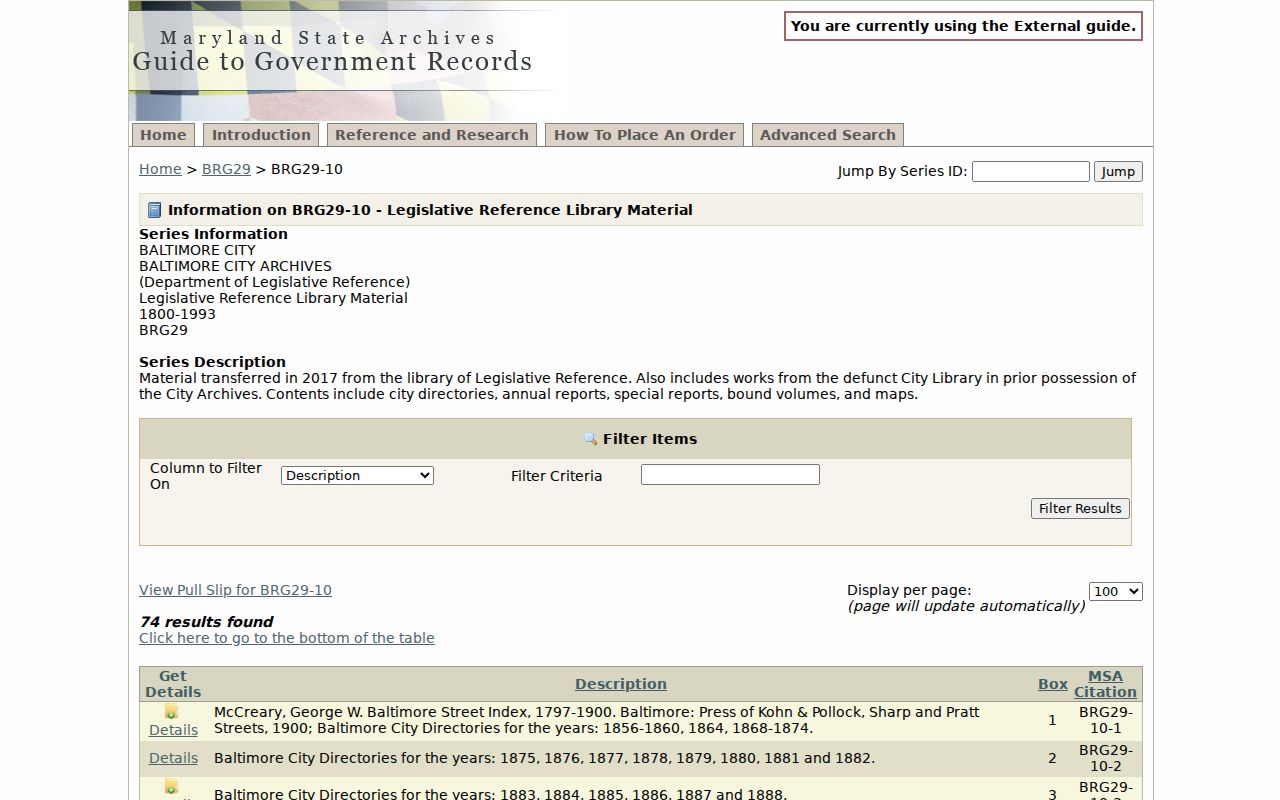
The 1967 listing supports that one edition only. It does not establish a continuous statewide set or a complete annual series for Rockville.
Rockville City Directory in LOC Collections
The Library of Congress city and telephone directory guide describes a companion collection worth knowing. Its city-directory microfilm runs principally 1861 through 1960. Films are arranged by city, not by state. More than 1,200 places are covered, though catalog gaps are possible. For Rockville, portions of White and Yellow Pages are cataloged for 1934-35, 1939-41, about 1947-48, about 1960, and 1983/84. Washington Metropolitan volumes from 1933 through 1945 can carry Rockville entries too.
Telephone pages may give a residence or business number. Alphabetical and address portions help separate similarly named people. Check the locality scope first. A household may sit under a metropolitan, rural, county, or nearby postal heading rather than the city label you expect.
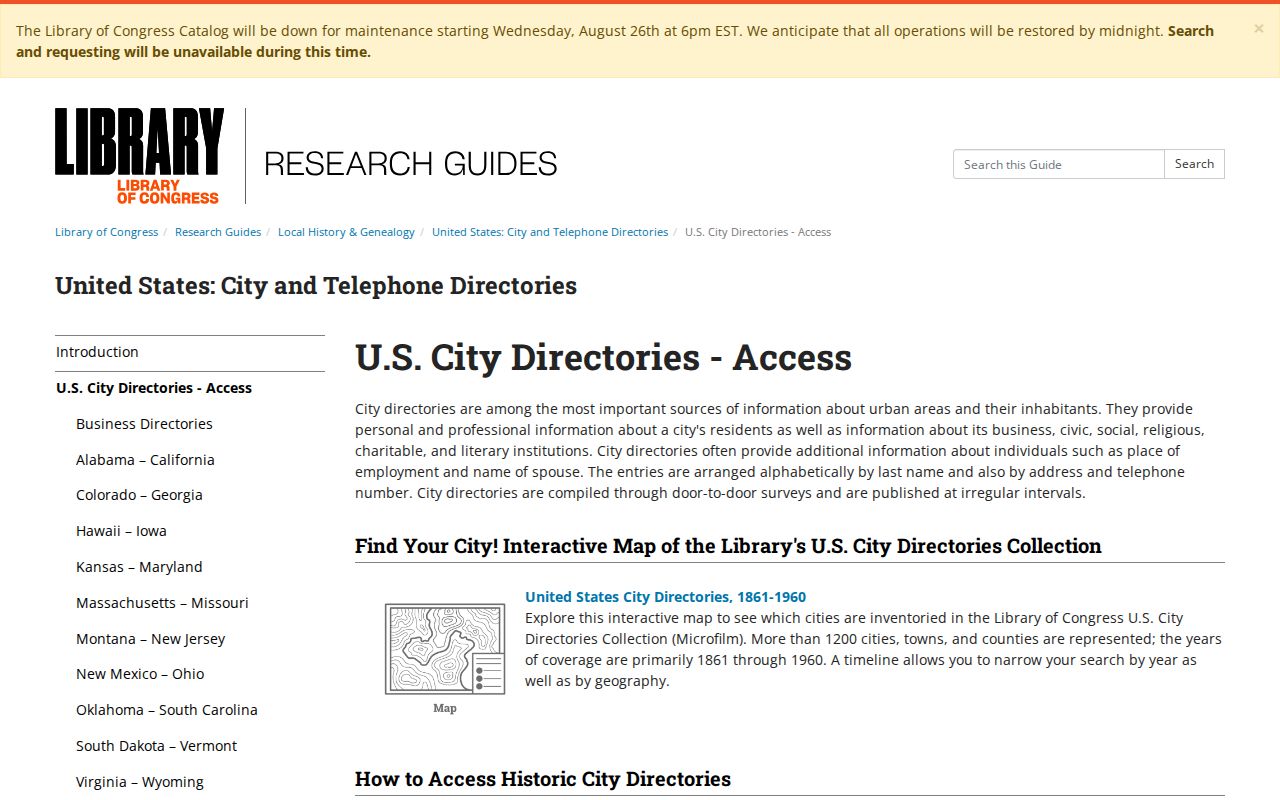
The Library of Congress guide maps the route. A visible city or telephone entry still needs comparison with the edition's front matter and its exact date.
Reading a Rockville City Directory Entry
Directory entries are usually ordered by surname. Many volumes add address and telephone arrangements. A Rockville entry can show a surname, given name or initials, spouse name, widow notation, occupation, employer, street address, telephone exchange or number, and a residence or business marker. Copy the text as printed. Resist the urge to expand initials or guess a spouse relationship. A short mark in one publisher's volume does not carry over to another.
| Name line | Surname and given name or initials, sometimes with a spouse or widow notation |
|---|---|
| Work or business line | Occupation, employer, business name, or classified listing when the edition includes it |
| Address line | Street number and street, compared with the edition date and street-era name |
| Telephone detail | Exchange and number, or a business/residence presentation in phone-page material |
| Edition evidence | Volume title, locality scope, edition date, page or image number, and publisher notes |
- Criss-cross directory
- A directory section arranged by street and address rather than surname. It can reveal adjacent listed occupants but does not establish who owned the parcel.
- Householder index
- An alphabetical finding aid for the person or household heading used by that volume. Check the printed scope before assuming every resident is indexed.
- Abbreviation key
- The publisher’s explanation of marks and shortened words, usually in the front matter. Photograph or transcribe it before interpreting a symbol.
- Widow notation
- A printed indication such as “wid” followed by a spouse’s name. It is a useful family-history clue, not a substitute for a death record.
Note: The abbreviation key in the chosen volume controls the meaning of its marks.
Rockville Directory: Washington to Hungerford
An address change can hide a listing that never really left. A 1968 Rockville directory entry shows how. A city preservation survey places Rockville 66 Auto Service at 801 N. Washington Street. The survey matched intersections. Its conclusion: present-day 801 Hungerford is likely the same site. The road was widened in 1975. Metrorail arrived in 1984. Both reshaped the corridor and retired the familiar street name.
Treat this as a method, not a citywide renumbering rule. Compare intersecting streets and numbered sequence first. Then test the connection against the deed legal description, a plat, a Sanborn sheet, and current Rockville maps and open-data layers. Keep both the old spelling and the new one in your notes. A directory match can otherwise look absent when only the road label changed.
Rockville Directory Papers and Archives
Newspapers give directory research a second witness. The Montgomery County Sentinel is digitized for 1855 through 1963 through the Maryland Digital Newspapers Project and Chronicling America. The 1964 through 1969 run is searchable on computers in the Sween reading room. Rockville Memorial Library holds microfilm for 1970 through 2020. Montgomery History keeps more. Its Sentinel microfilm spans 1855 through 1969, along with genealogy abstracts and obituary clippings.
The Montgomery History archives research guide describes finding aids and reading-room context. The guides are OCR-searchable. The underlying material is no self-service database. The Jane C. Sween Research Library takes appointments and remote research requests, while Rockville Memorial Library provides public computers and microfilm readers. Confirm the catalog before you travel, since the branch page promises no dedicated directory shelf.
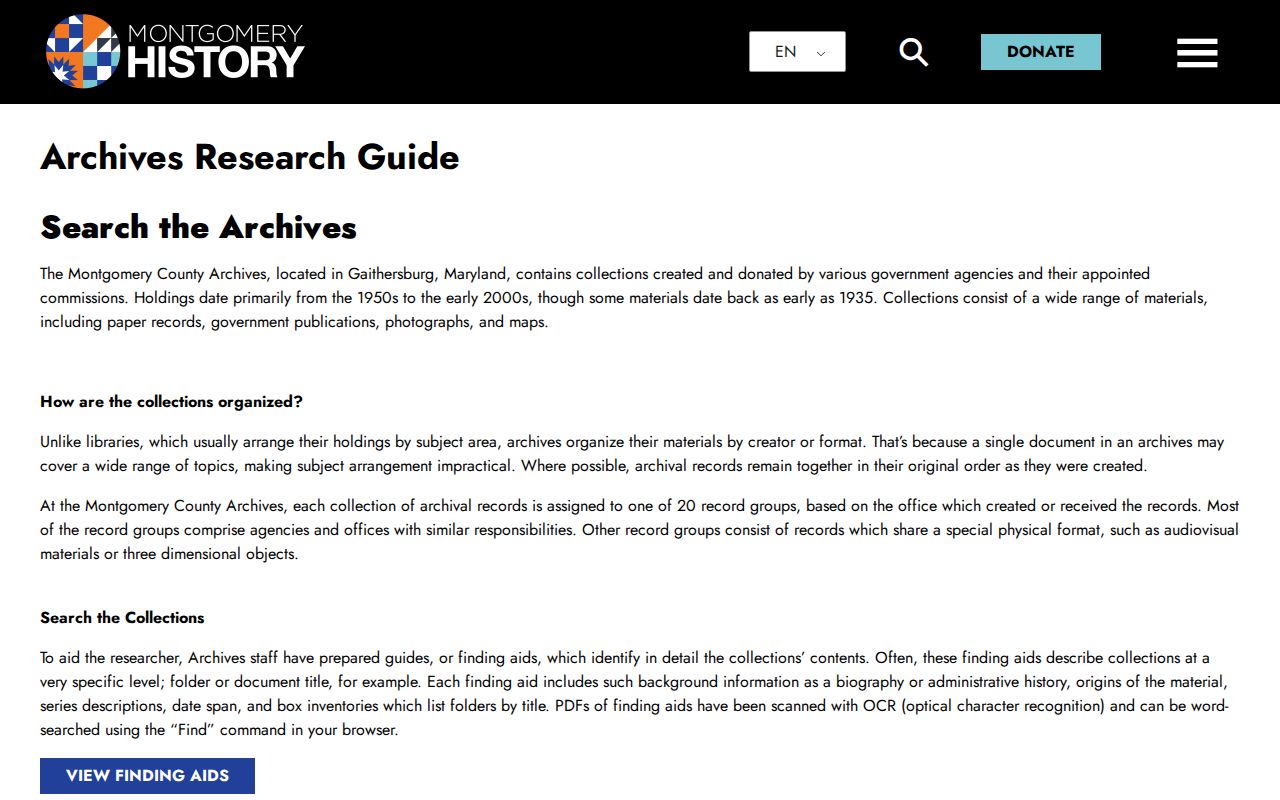
An obituary, notice, or clipping can explain why a household disappeared from the Rockville directory. Date it and weigh it against the address, never as proof of a whole timeline.
Rockville City Directory Household Trail
Family history works best as a trail, not a single listing. Start with the edition nearest a known event. Carry the exact spelling forward from there. Note the initials, address, occupation, and any spouse or widow notation, plus the page image. Search the alphabetical section first. Then try the street or address section, which can catch an entry whose surname was misread or whose household appeared under another adult.
- Locate the first confirmed Rockville city directory entry and record its full citation.
- Check the nearest available edition before and after it, preserving spelling changes rather than silently standardizing them.
- Use the address-oriented portion to identify listed neighbors and to test whether the street name is consistent.
- Pair the directory period with an open federal census schedule and a dated newspaper or obituary lead.
- Use recorded land documents separately when the question is ownership rather than presence.
Households vanish from directories for many reasons. The household may have moved. It may have died out, changed its listed name, left the volume's locality, or gone unlisted, and census schedules, newspapers, probate material, and deeds sort those possibilities apart better than a blank search.
Rockville Directories Meet Census and Sanborn
Census schedules pair naturally with Rockville directories. The federal records from 1790 through 1950 are public under the 72-year rule. Schedules from 1960 and later remain closed. Match each directory year to its nearest census: 1900, 1910, 1920, 1930, 1940, or 1950. Rockville's boundaries kept changing. So did Montgomery County's enumeration districts, which means a household may sit under a rural district, a town name, or a different postal label.
Sanborn maps cover the physical side. The 1897 Rockville Sanborn set holds three sheets. The November 1915 set holds six. The sheets show building footprints, materials, stories, uses, and street geometry, but they do not name every occupant. Montgomery History also points to Lusks real-estate directories and property maps from 1951 through 1993, Klinge atlas coverage from 1931 through 1959 with gaps, and selected aerial tax-map years.
Note: A map dates the place, while a directory or census helps identify the people connected with it.
Rockville City Directory Research Timeline
Rockville's directory trail belongs to a longer records history. The city once carried earlier town names. It grew through railroad and postwar eras, later reorganized its major corridors, and kept shifting its address geography, so preserve the source date beside every directory address.
- 1801: the town was officially named Rockville, after earlier Montgomery Court House and Williamsburgh usage.
- 1933-45: Washington Metropolitan directory volumes include Rockville portions.
- 1961, 1967-69: verified Peerless and State Archives editions create selected late-1960s comparison points.
- 1975 and 1984: Hungerford corridor widening and Metrorail changed the setting around the documented 801 address bridge.
- 2026: Peerless Rockville’s local-history programming remains a current lead for exhibits, talks, and research requests.